
A compact, data-driven snapshot shows the microcontroller in question delivering a mix of mid-range performance and embedded connectivity that matters to designers, buyers, and supply teams. Recent market checks show fluctuating availability and price sensitivity across listings. This brief highlights why the R5F1217CMNA should be evaluated for fit, cost risk, and BOM scheduling now.
Purpose and scope are practical and action-oriented. The article covers a full specs breakdown, a live stock snapshot, integration guidance, vetted alternatives, and a procurement checklist. Readers will get targeted guidance they can apply during component selection, prototype bring-up, and sourcing reviews to reduce rework and supply risk.
(1/5) Device overview — key features at a glance
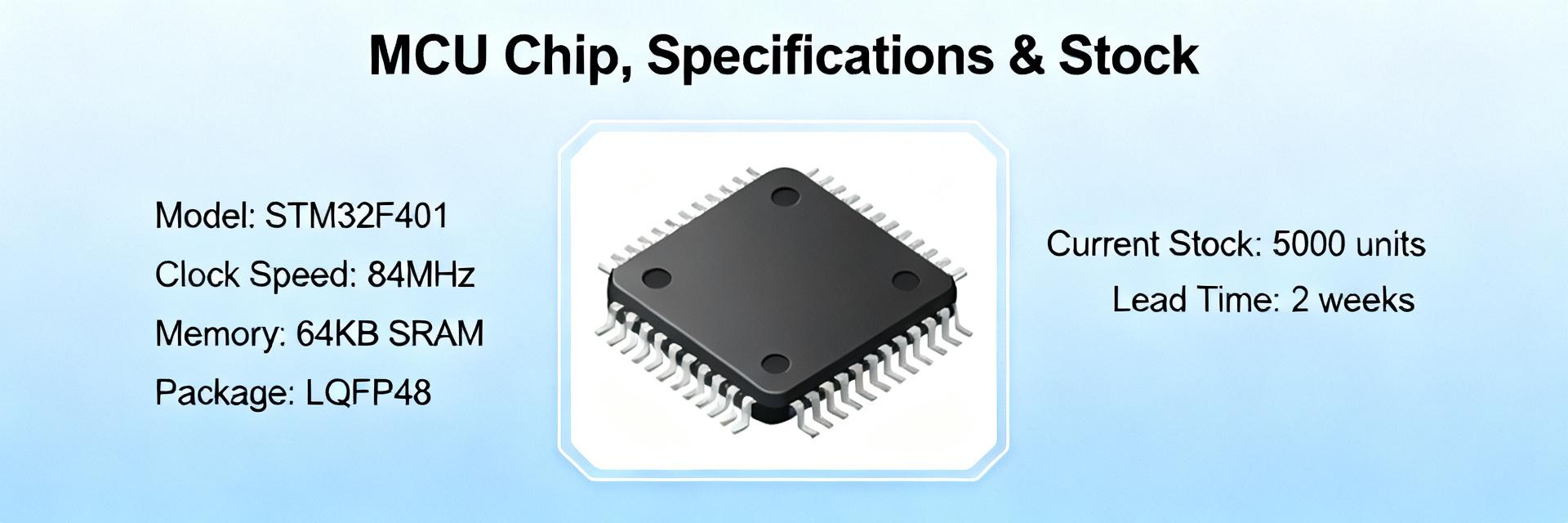
High-level feature summary
This unit sits in a microcontroller family with a high-efficiency 32-bit core at modest clock rates, multiple memory tiers, and common QFN/SSOP package choices. Designers evaluating IoT, industrial control, or HMI nodes will judge fit by core performance, on-chip RAM/Flash, and available comms before deeper validation.
Quick Spec Reference Table
This table lets engineers rapidly compare the device to alternate MCUs for pin and memory fit.
| Parameter | R5F1217CMNA Specifications |
|---|---|
| CPU Core | 32-bit Core (Deterministic Execution) |
| Max Clock Frequency | Up to 32 MHz |
| Flash Memory / ROM | High-Endurance Program Flash |
| SRAM | Integrated High-Speed RAM |
| Analog Peripherals | Multi-channel High-Resolution ADC |
| Communication Interfaces | Multiple UART / SPI / I2C Ports |
| Package Availability | Space-saving QFN & SSOP options |
(2/5) Full technical specs breakdown
Core, performance & memory architecture
The CPU provides deterministic execution suitable for real-time tasks, with Flash/ROM sized for moderate firmware and RAM ranges that constrain large stacks or heaps. Inspect the memory map, boot vectors, and bootloader footprint early; the specs drive whether in-place OTA, encryption, or large middleware stacks are viable.
Peripherals, interfaces & power characteristics
Key specs include UART/SPI/I2C counts, GPIO density, ADC resolution and sampling rate, timers/PWM, and available low-power modes plus supply voltage range. Prioritize ADC resolution and number of serial ports when selecting this MCU for sensor fusion or multi-channel telemetry; verify power-mode entry/exit costs for battery designs.
(3/5) Current stock & availability snapshot
Availability patterns and lead-time signals
Common listings show in-stock, limited, pre-order, and long-lead statuses; packaging (cut-tape vs tape-and-reel) and minimum order quantities affect available quantities. Read multiple stock notices, watch for conflicting lead times, and treat unusually low prices with caution as indicators of grey-market or mismarked units.
Pricing trends & procurement implications
Prices typically vary between single-piece board buys and taped reel bulk, and volatility tends to increase near manufacturing transitions. We recommend safety stock levels, staggered buys, and smaller early sample orders; coordinate NRE timelines to allow for supplier variability and possible last-minute substitutes.
(4/5) How to evaluate and integrate R5F1217CMNA into your design
PCB footprint, pinout and hardware considerations
Verify power rails, decoupling strategy, boot-pin states, crystal or internal oscillator needs, and package thermal pads. Include decoupling close to VDD pins, pull resistors for boot pins, and test points for debug; review footprint tolerances and handling guidance before spin to avoid respins.
Software, development and validation tips
Plan Flash and RAM allocation, decide on bootloader strategy, include a serial debug interface, and define validation cases for power cycling and peripheral stress. Stage bring-up starting with power and clock stability, then low-level peripherals, and finish with full system stress tests to catch timing or memory-edge bugs early.
(5/5) Alternatives, risk mitigation & procurement action checklist
How to pick suitable substitutes and what to verify
Compare substitutes by pin compatibility, core performance, memory parity, peripheral match, and voltage/thermal envelope. Prioritize pin-compatible packages to minimize PCB changes, verify interrupt mapping and peripheral register differences, and run a short firmware porting proof to validate functional parity before large buys.
Step-by-step procurement & design-risk checklist
- Verify real-time stock and distributor lead times.
- Confirm part marking, packaging formats, and factory MOQs.
- Secure early engineering samples on tape-and-reel.
- Evaluate firmware NRE and memory allocation margins.
- Set dual-sourcing triggers and register alternative MPNs.
Summary: The device offers a balanced combination of embedded I/O, moderate CPU capability, and practical power modes making it suitable for many industrial and IoT builds; however, supply-side variability and memory limits are the main risks. Perform targeted stock checks, reserve samples, and run an early bring-up to validate fit and procurement timelines.
Key summary
- R5F1217CMNA fit: mid-range MCU with balanced I/O and memory — suitable for moderate embedded applications where deterministic performance matters and peripheral mix aligns with BOM constraints.
- Critical specs to verify: Flash/RAM sizes, ADC resolution, UART/SPI counts, and low-power mode behavior before committing to a PCB spin or production run.
- Procurement actions: confirm true stock vs lead-time listings, secure samples on tape-and-reel when possible, and set safety-stock triggers based on BOM risk and production cadence.
Frequently Asked Questions
Is R5F1217CMNA a good fit for battery-powered sensor nodes?
Answer: It can be, provided the part's low-power modes and wake latency meet the node's duty cycle. Validate sleep current, wake times, and ADC conversion energy in lab tests; include power cycling and brown-out tests during validation to ensure reliable field behavior under battery conditions.
What specs should I prioritize when comparing alternatives to this MCU?
Answer: Prioritize memory (Flash/RAM) for firmware footprint, ADC resolution and sample rate for sensing needs, number and type of serial interfaces for connectivity, and package pinout to limit PCB redesign. Evaluate voltage ranges and thermal limits for system reliability.
How should procurement teams handle suspicious stock pricing and listings?
Answer: Treat unusually low prices as a red flag. Cross-check lead times across multiple reputable sources, verify part markings on samples, confirm packaging and MOQ, and escalate to supply-chain managers to avoid counterfeit or mismarked components entering production.
How do we mitigate supply-chain risks for the R5F1217CMNA?
Answer: Establish safety stock triggers, qualify pin-to-pin alternative MCUs early in the design phase, and secure engineering samples from authorized distributors to prevent line-down situations.


